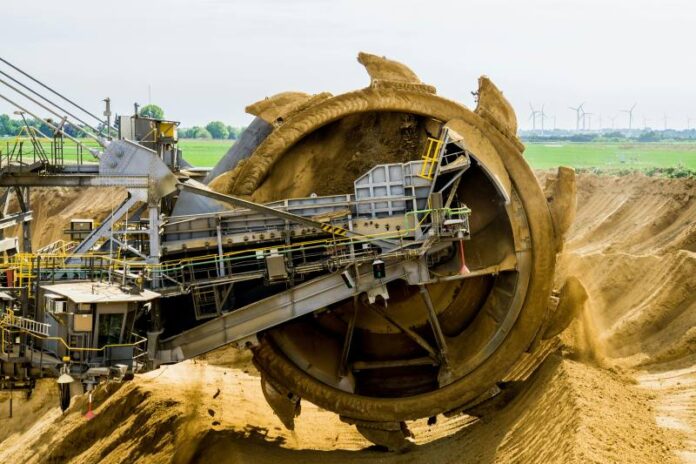
Australia has a strange superpower.
It isn’t ancient cities, cutting-edge factories, or financial wizardry. It’s something much simpler — and much deeper.
Australia got rich by digging.
For decades, the Australian economy has been powered by an almost comically straightforward idea: take valuable rocks out of the ground and sell them to the world. Yet behind this simplicity lies one of the most successful economic stories of the modern era — one that reshaped cities, politics, global trade, and Australia’s place in the world.
A Continent Built on Resources
Australia is one of the most resource-rich countries on Earth. Iron ore, coal, gold, bauxite, copper, uranium, natural gas, lithium — if it’s valuable and comes from the ground, Australia probably has it in abundance.
This geological luck matters. While many nations industrialised by building factories, Australia industrialised by exporting raw materials. From the gold rushes of the 1850s to the iron ore boom of the 21st century, the pattern has remained remarkably consistent.
The land itself became the engine of growth.
The Mining Boom That Changed Everything
The modern mining story really took off in the early 2000s, when China’s rapid industrialisation created an almost insatiable demand for raw materials.
Steel mills needed iron ore.
Power plants needed coal.
Cities needed copper.
Batteries needed lithium.
Australia was perfectly positioned — politically stable, resource-rich, and close enough to Asia to ship vast quantities efficiently. Prices soared. Investment flooded in. Entire regions transformed almost overnight.
Mining towns expanded.
Ports grew larger.
Railways stretched deep into the outback.
For a while, it felt like the boom might never end.
Why Mining Made Australia Different
Mining didn’t just bring money — it shaped how Australia functions as a country.
High wages: Mining jobs paid extraordinarily well, pushing up wages across the economy and helping create Australia’s strong middle class.
A strong currency: The Australian dollar became closely tied to commodity prices, earning it the nickname “the commodity currency.”
A resilient economy: During the 2008 global financial crisis, Australia famously avoided recession — largely because mining exports kept flowing to Asia.
Government revenue: Royalties and taxes funded public services, infrastructure, and social programs, helping support Australia’s high standard of living.
But this success also created dependencies.
The China Question
At the height of the boom, China was buying more than half of Australia’s iron ore exports. This created a strange dynamic: Australia grew increasingly economically dependent on a country it didn’t always politically agree with.
When relations cooled, many Australians began asking uncomfortable questions:
- What happens if China stops buying?
- Is Australia too reliant on digging and selling rocks?
- Has mining crowded out other industries?
These debates still shape Australian politics today.
The Costs Beneath the Surface
Digging holes comes with consequences.
Mining reshaped landscapes, strained water supplies, and created environmental damage that can last generations. It also raised difficult issues around Indigenous land rights, as many mining projects sit on or near traditional lands.
At the same time, regions outside mining hubs sometimes felt left behind, deepening inequality between booming resource states and the rest of the country.
Australia’s wealth came at a price — and not everyone paid or benefited equally.
From Iron Ore to Lithium: The Next Chapter
Australia’s digging story isn’t over — it’s evolving.
As the world transitions toward renewable energy and electric vehicles, demand for critical minerals like lithium, nickel, and rare earths is exploding. Once again, Australia finds itself sitting on exactly what the world wants.
This time, the challenge is different:
Can Australia move beyond simply exporting raw materials and start processing them?
Can it balance environmental responsibility with economic opportunity?
Can it avoid repeating the boom-and-bust cycles of the past?
A Nation Built From the Ground Up
“Digging holes” might sound like a joke — but it built modern Australia.
It funded cities, paid wages, attracted migrants, and turned a remote continent into a global economic player. Few countries have turned geology into prosperity as effectively, or as unapologetically, as Australia has.
The real question isn’t whether digging holes made Australia rich.
It’s whether the country can use that wealth to build something even more lasting.

