In the years after World War II, Australia faced a big problem — and an even bigger idea.
The country wanted electricity, water, jobs, migrants, and confidence. What it got instead was one of the most ambitious engineering projects in the world: a plan to bend mountains, reverse rivers, and build a modern nation in the process.
It was called the Snowy Mountains Scheme. And for decades, it stood as proof that Australia believed nothing was too hard — even the impossible.
A Bold Post-War Dream
By the late 1940s, Australia was changing fast. The war had shaken old certainties, industry was expanding, and the population was growing. Cities needed power. Farmers needed water. Politicians wanted to prove that Australia could stand on its own in a turbulent world.
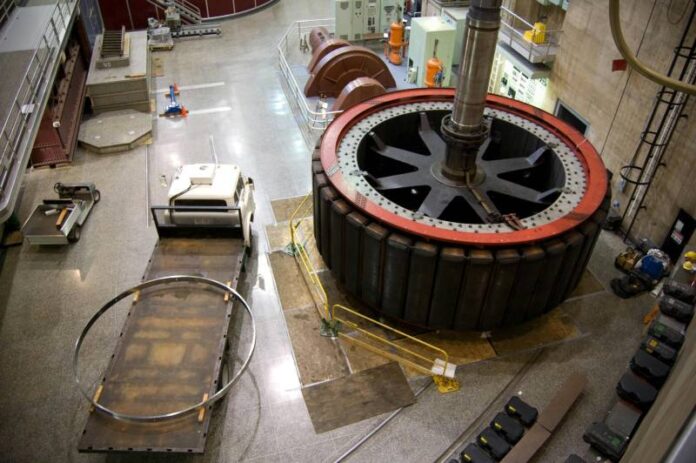
The idea was radical: divert the waters of the Snowy River inland, through tunnels bored deep inside the Alps, to generate hydroelectric power and irrigate vast inland areas.
It would require:
- 16 major dams
- 7 power stations
- Around 225 kilometres of tunnels
- Construction in freezing winters, rugged mountains, and near-total isolation
Many experts said it couldn’t be done.
Australia decided to do it anyway.
Engineering on an Epic Scale
Work began in 1949 and continued for 25 years.
Mountains were drilled from the inside. Rivers were redirected. Entire valleys were flooded to create reservoirs. Towns were carved out of wilderness to house workers.
At its peak, more than 100,000 people worked on the project. They used cutting-edge technology, invented new techniques on the fly, and learned — often the hard way — how to build at altitude in brutal conditions.
Accidents were common. 121 workers lost their lives.
Yet the project moved forward, tunnel by tunnel, dam by dam, until the scheme became one of the largest hydroelectric systems in the world.
Power, Water, and a New Economy
The Snowy Mountains Scheme fundamentally changed Australia’s economy.
It generated huge amounts of renewable electricity for New South Wales and Victoria, powering factories, cities, and suburbs. At the same time, it sent water westward into the Murray–Darling Basin, transforming agriculture across inland Australia.
Regions that once struggled with drought suddenly had reliable irrigation. Food production expanded. Rural economies stabilised.
The Snowy didn’t just produce electricity — it reshaped where and how Australians lived.
A Nation of Migrants, Forged in Concrete
Perhaps the most important legacy of the Snowy Mountains Scheme wasn’t technical at all.
It was human.
Workers came from more than 30 countries, many of them displaced by war. Italians, Greeks, Yugoslavs, Germans, Poles, Ukrainians, and many others arrived with little English and fewer possessions.
They lived together in camps, worked side by side underground, and built friendships across cultures. For many Australians, it was their first real encounter with large-scale non-British immigration.
The Snowy became a turning point — proof that multiculturalism could work, and that migrants were not a burden, but builders of the nation.
Redefining Australian Identity
Before the Snowy, Australia often saw itself as small, remote, and dependent.
After it, something shifted.
The scheme became a symbol of confidence — a statement that Australians could tackle projects on a world scale, with world-class results. It fed into a growing sense of independence and capability that defined post-war Australia.
Schoolchildren learned about it. Politicians pointed to it with pride. Engineers around the world studied it.
The Snowy Mountains Scheme became part of the national story — a modern equivalent of the pyramids or Roman aqueducts, built not by emperors, but by workers.
Environmental Costs and Changing Views
Like many great projects of the 20th century, the Snowy came with environmental consequences.
The Snowy River itself was drastically reduced, damaging ecosystems downstream. Indigenous connections to the land were largely ignored. Entire landscapes were altered permanently.
In later decades, efforts were made to restore river flows and address environmental damage — a sign that Australia’s relationship with nature, and with nation-building, was evolving.
From Concrete to Continuity
Today, the Snowy Mountains Scheme still operates — and still matters.
It provides renewable energy, grid stability, and water security. New projects, like Snowy 2.0, aim to adapt the original vision to a future shaped by wind, solar, and climate change.
The tools have changed. The confidence remains.
When Australia Believed in Big Things
The Snowy Mountains Scheme wasn’t just about power stations or dams.
It was about belief.
Belief that a young country could reshape its landscape.
Belief that migrants could become Australians.
Belief that shared effort could build a better future.
Australia tried the impossible — and for a moment, made it real.

