Some rivalries are fought with armies.
Australia and New Zealand fight with coffee cups, bakery counters, and dessert forks.
On the surface, it’s playful banter — jokes about flat whites, meat pies, and pavlova. But underneath the humour is a deeper story about migration, identity, and how two young nations define themselves through what they eat.
A Friendly Rivalry, Taken Seriously
Australians and New Zealanders are famously close — shared history, shared wars, shared accents (according to everyone else).
Which is precisely why the rivalry matters.
Because when countries are this similar, the small differences become sacred. Food becomes a way of drawing lines, claiming originality, and asserting cultural confidence.
And nothing sparks debate faster than asking: Who did it first?
The Flat White Arms Race
The flat white is the battleground of modern Australasia.
Both countries claim it. Both have strong evidence. Both refuse to concede an inch.
What matters less than the origin story is what it represents: a coffee culture shaped by post-war Italian migration. Espresso machines, milk texturing, and café life arrived with migrants and spread rapidly.
By the 1990s, Australia and New Zealand were serving coffee that embarrassed much of the English-speaking world. Today, their café cultures are global exports — from London to New York to Singapore.
The rivalry isn’t about caffeine.
It’s about craftsmanship.
Meat Pies, Bakeries, and Everyday Nationalism
If coffee is the sophisticated front, bakeries are the emotional core.
The meat pie is a shared staple, eaten at sports grounds, petrol stations, and lunch breaks. But the details matter: pastry thickness, gravy texture, filling ratios.
In New Zealand, bakeries remain fiercely local and deeply cherished. In Australia, the pie is often louder, bigger, and more commercial.
Arguing about pies is really arguing about authenticity.
Pavlova: The Dessert That Launched a Thousand Arguments
No food rivalry is more famous than pavlova.
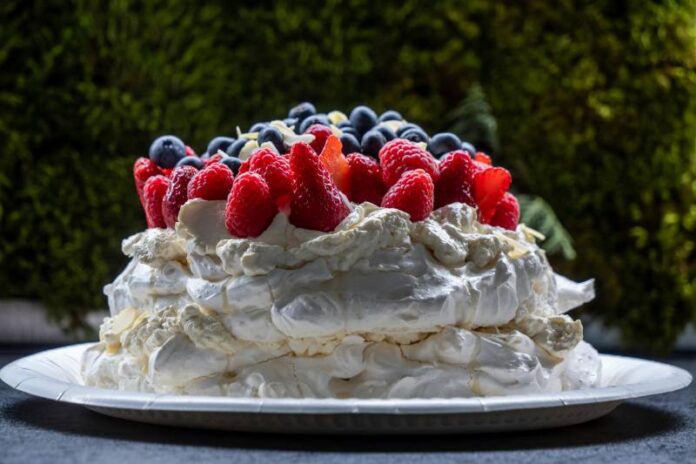
Both countries claim to have invented the airy, meringue-based dessert topped with cream and fruit. Both produce historical evidence. Both ignore the other’s evidence completely.
Pavlova became popular in the early 20th century, named after Russian ballerina Anna Pavlova during her tours of the region.
Who made it first may never be settled.
But pavlova became something more important: a symbol of shared culture turned competitive. A dessert that belongs to us — but not them.
Immigration on a Plate
Much of this food culture exists because of immigration.
Southern Europeans brought espresso.
Southeast Asians reshaped street food.
Pacific Islanders influenced flavours and techniques.
Middle Eastern migrants transformed bakeries and cafés.
Australia and New Zealand didn’t just copy British food traditions — they remixed them.
Food became one of the most successful integrations of multiculturalism in both societies.
Food as Soft Power
Today, food is part of how both countries sell themselves to the world.
Coffee culture attracts creatives and entrepreneurs.
Cuisine signals openness and quality of life.
Local food scenes support tourism, branding, and identity.
The rivalry plays well internationally — two small countries, competing not with force, but flavour.
More Than a Joke
The Australia–New Zealand food rivalry is funny because it’s safe.
No borders change hands.
No one loses face.
Everyone gets dessert.
But it matters because food is one of the first places where young nations felt confident enough to say, this is ours.
Flat whites, meat pies, and pavlova aren’t just food.
They’re proof that identity can be built — one cup, one bite, one argument at a time.

